

Example scenario
Consider a situation where a network of smart factories is coming online, each with IoT-connected controllers, security cameras, and machine sensors. In this scenario, each factory’s network blocks inbound connections. However, your technicians need to do remote maintenance on these cameras via SSH, and your SaaS platform’s cloud software needs access to device data via a web app for mission-critical operations.Architectural reference
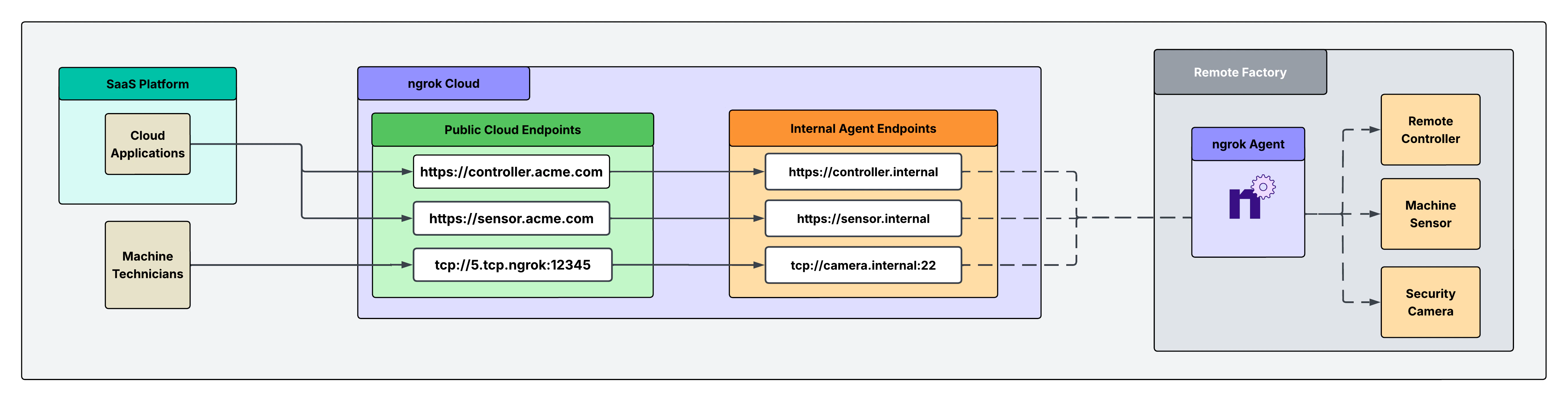
Why only one ngrok agent per factory?
Traditionally, you might assume that every device inside the factory needs its own ngrok agent, but this isn’t necessary. A single ngrok agent is installed on a network-accessible machine inside the factory. The agent acts as a central gateway (jumpbox) that can reach any machine on the local network, eliminating the need for multiple agents.What you’ll need
- An ngrok account. If you don’t have one, sign up.
- An ngrok agent configured in a remote IoT-based network. See the getting started guide for instructions on how to install the ngrok agent.
1. Create a service user and authtoken for isolated network access
First, create a service user and an associated authtoken for each of your factories. A service user is intended for automated systems that programmatically interact with your ngrok account (other platforms sometimes call this concept a Service Account). Create a separate service user and associated authtoken for each of your factories so that:- Their usage of your ngrok account is isolated and scoped with a specific permission set
- If an agent is compromised, you can revoke its access independently
- Agent start/stop audit events are properly attributed to each customer
- Your ngrok agents don’t stop working if the human user who set them up leaves your ngrok account
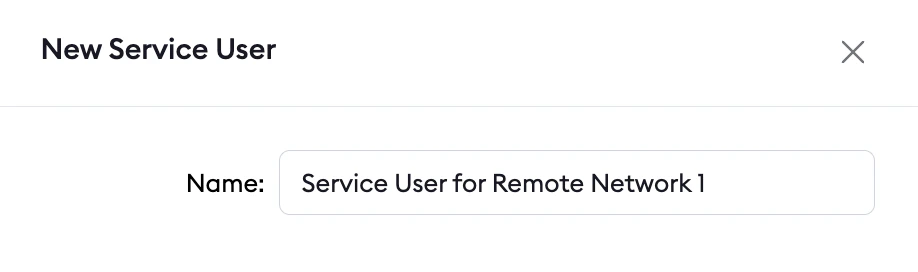
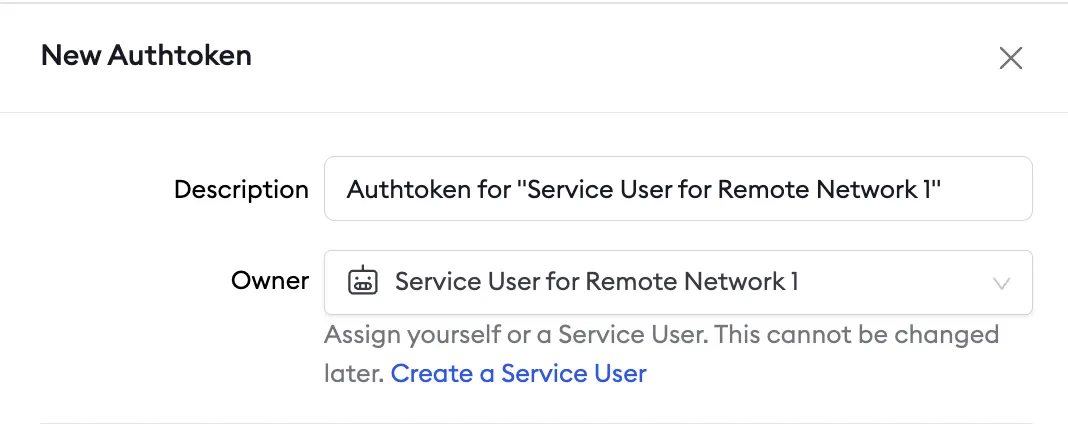
2. Install the ngrok agent within your remote network and configure internal Agent Endpoints in ngrok.yml
Configure the agent to create internal Agent Endpoints that point to the devices you want to remotely access. This connects the devices to your ngrok account, but nothing can connect to them until you complete the subsequent steps. The configuration to achieve this is shown in the example agent configuration file below. Internal Agent Endpoints are private endpoints that only receive traffic when forwarded through the forward-internal Traffic Policy action. This allows you to route traffic to an application through ngrok without making it publicly addressable. Internal Agent Endpoint URL hostnames must end with.internal.
After installing the ngrok agent, define internal Agent Endpoints for each service you want to remotely access inside the ngrok configuration file.
You can install ngrok and its configuration file at /path/to/ngrok/ngrok.yml and the executable at /path/to/ngrok/ngrok.
3. Reserve a TCP address for security camera connectivity
You need to reserve a TCP address to create a TCP Cloud Endpoint, which you’ll do in the next step. Reserving the address holds it exclusively for your ngrok account.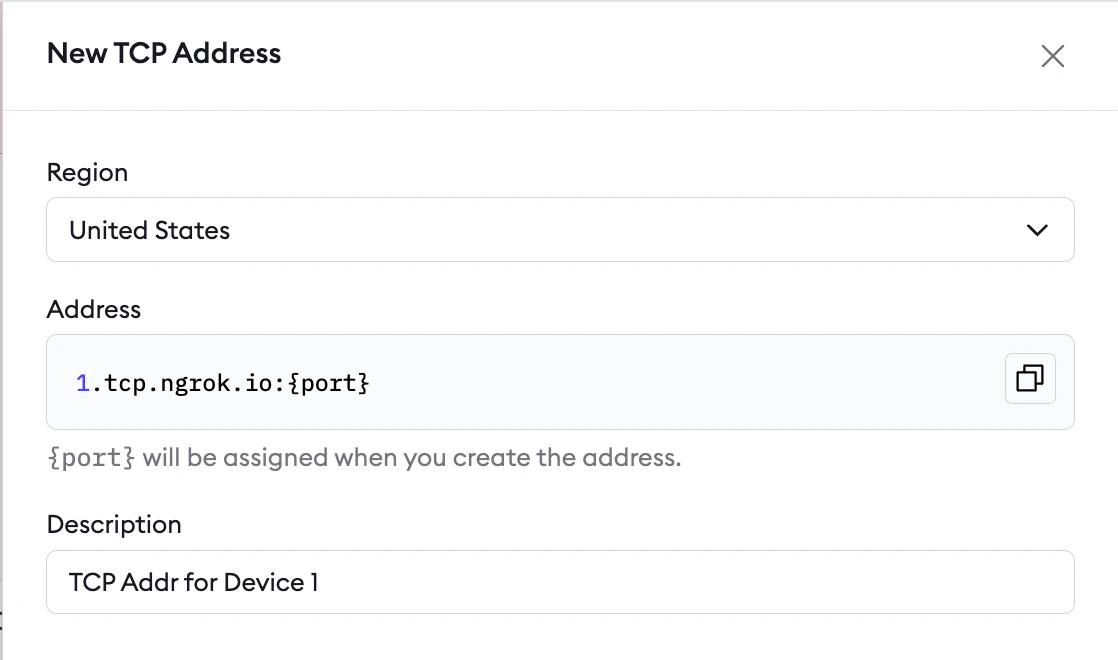
4. Create your Cloud Endpoints and attach a Traffic Policy
Cloud Endpoints are persistent, always-on endpoints whose creation, deletion, and configuration is managed centrally via the dashboard or API. They exist permanently until explicitly deleted. Cloud Endpoints don’t forward their traffic to an agent by default—they only use their attached Traffic Policy to handle connections. Create a public Cloud Endpoint in the ngrok dashboard by navigating to Endpoints and clicking New.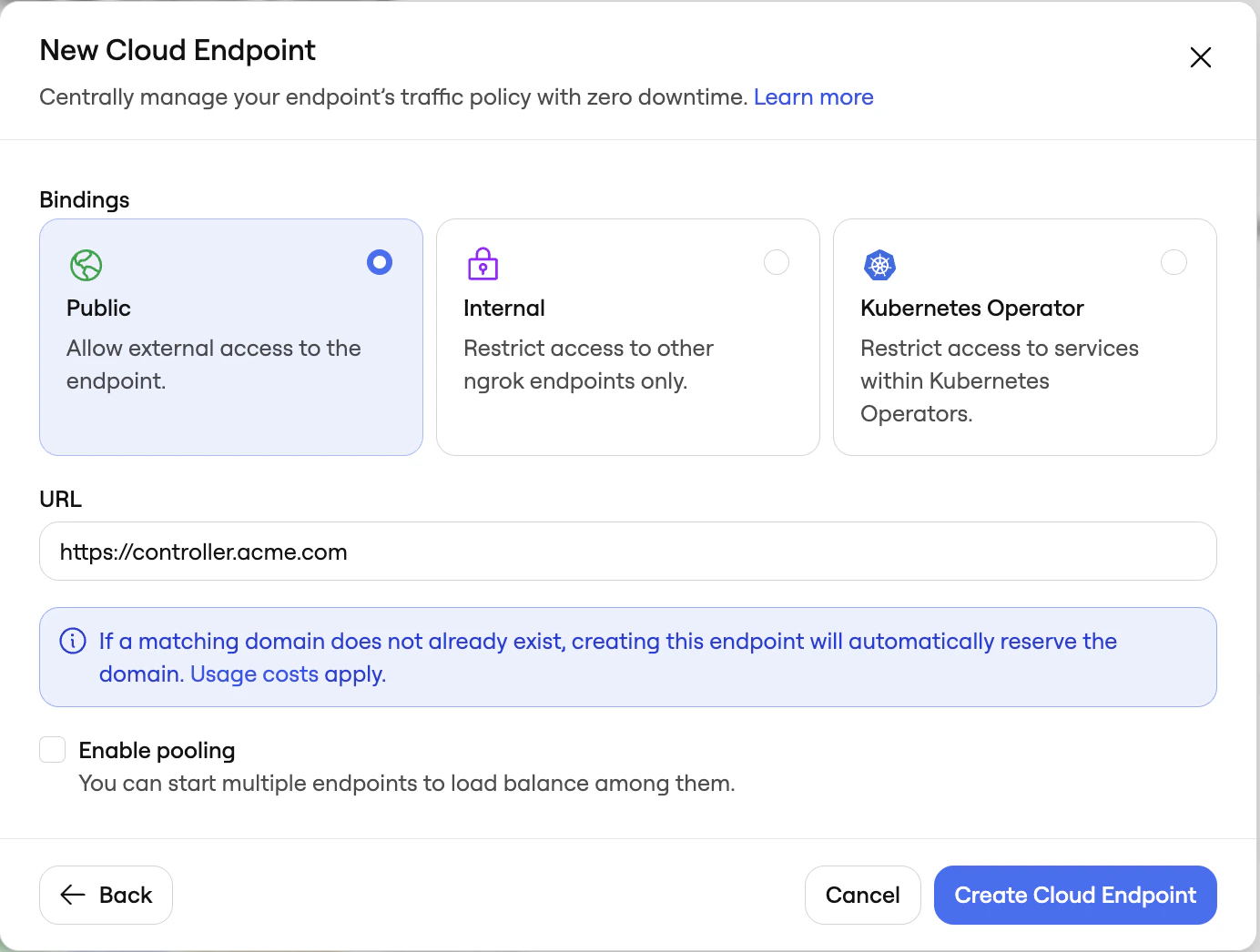
https://sensor.acme.com and tcp://1.tcp.ngrok.io:12345 (using your reserved TCP address).
Click on your newly created controller Cloud Endpoint and replace the default Traffic Policy with:
5. Secure your Cloud Endpoints with OAuth, TLS version control, and IP restrictions
Navigate to your newly created Cloud Endpoints in the Endpoints tab on your ngrok dashboard, and apply a Traffic Policy action to each. For this example, apply OAuth to your controller endpoint, enforce a minimum TLS version for your sensor endpoint, and enable IP restrictions for your camera endpoint. Browse the full list of Traffic Policy actions. You can add each action directly to the Cloud Endpoint’s YAML configuration. The final Traffic Policy config for each endpoint is shown below.https://controller.acme.com
https://sensor.acme.com
tcp://1.tcp.ngrok.io:12345
What’s next
- Install ngrok as a background service to ensure the agent starts on boot and recovers from failures.
- Eliminate single points of failure with redundant agents to achieve high availability.